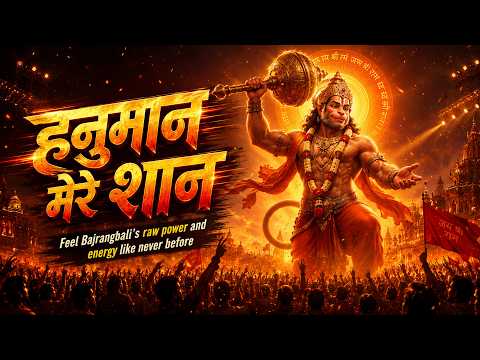
"Hanuman Mere Shaan" is a devotional anthem that celebrates Lord Hanuman as the ultimate source of personal strength, courage, and pride — the word shaan meaning honor, glory, or dignity in Hindi. It is not a soft, slow bhajan but a high-energy musical tribute designed to awaken the fierce, fearless spirit that devotees associate with Bajrangbali.
Who Is Bajrangbali and Why Does He Inspire Such Intensity?
Bajrangbali is one of the most beloved names for Lord Hanuman, pointing directly to his legendary physical and spiritual power — bajrang referring to his diamond-hard, thunderbolt-like body. Hanuman is revered across Hindu tradition as the devoted servant of Lord Ram, a celibate warrior who crossed oceans, moved mountains, and faced demons without a flicker of fear. What makes him so deeply personal to millions of devotees is that he is not a distant, unreachable god — he is described as ever-present, compassionate, and fiercely protective of those who call on him sincerely. His story teaches that true strength flows from devotion, selfless service, and an unshakeable sense of purpose.
What Does "Hanuman Mere Shaan" Actually Mean?
"Hanuman Mere Shaan" translates simply as "Hanuman is my pride" or "Hanuman is my glory" — a bold, personal declaration of identity rooted in devotion. When a devotee says this, they are not just praising Hanuman from a distance; they are claiming him as their own protector, their defining strength, their reason for walking through the world without fear. This kind of devotional language is common in the bhakti tradition, where the relationship between a worshipper and their deity is deeply intimate and almost familial. Using the word mere — meaning "my" — makes the anthem feel like a personal vow rather than a public prayer.
When and How to Use This Track in Your Practice
This track works best when you need to shift your energy before something that demands courage, focus, or resilience. Play it during your Tuesday or Saturday morning puja, both days traditionally associated with Hanuman worship, to begin the day with intention and fire. It is equally well-suited for listening before a difficult task, a challenging workout, or any moment when self-doubt starts to creep in — think of it as an audio reminder of the strength already within you. During festivals like Hanuman Jayanti, tracks like this one can energize a gathering and lift collective devotion in a way that slower hymns sometimes cannot. You can also use it as a meditation anchor, letting the rhythm ground you while you mentally repeat the name of Hanuman or simply sit with his image in your mind.
Why High-Energy Devotional Music Matters
High-energy bhajans and anthems serve a real spiritual function — they move devotion out of the head and into the body, making it felt rather than just thought. Across centuries of the bhakti movement, musicians and saints understood that rhythm, melody, and emotional intensity could open the heart in ways that quiet reflection sometimes cannot. For younger devotees especially, a track that feels urgent and alive can make a centuries-old tradition feel immediate and relevant. "Hanuman Mere Shaan" sits in this space — it honors a timeless deity while speaking the emotional language of the present moment.
Common questions
What does "Hanuman Mere Shaan" mean in English?
It means "Hanuman is my pride" or "Hanuman is my glory," and it is a personal declaration of devotion to Lord Hanuman. The word mere means "my," making it an intimate statement of identity and faith rather than a general hymn of praise.
Which days are best for listening to Hanuman devotional music?
Tuesday and Saturday are traditionally considered Hanuman's sacred days and are the most auspicious times for his worship, prayers, and devotional music. Many devotees also listen to Hanuman bhajans on the full moon or during festivals like Hanuman Jayanti.
Can I play this kind of track during meditation?
Yes — high-energy devotional tracks can be used at the start of a meditation session to focus the mind and awaken a sense of inner strength before settling into stillness. Some practitioners also use them as background sound during active, movement-based prayer or during puja rituals.
Enjoyed this? Follow Soulful Music India for more.