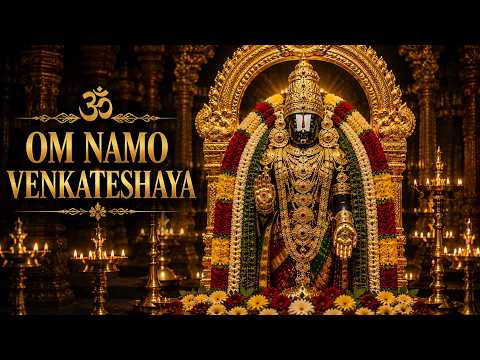
Om Namo Venkateshaya is a Sanskrit mantra of devotion and surrender offered to Lord Venkateswara, one of Hinduism's most widely revered deities, traditionally associated with wealth, grace, and the fulfillment of sincere prayers.
For millions of devotees across India and around the world, this mantra is far more than a sequence of sacred syllables. It is a daily act of trust — a moment of turning toward something greater and asking for both material and spiritual abundance. The fact that it takes just two minutes to listen makes it one of the most accessible devotional practices available to anyone, regardless of how busy life gets.
Who Is Lord Venkateswara?
Lord Venkateswara is the presiding deity of Tirumala, the hilltop temple in Andhra Pradesh that draws more pilgrims every year than almost any other religious site on earth.
He is a form of Lord Vishnu, the preserver and sustainer in the Hindu tradition, and he is beloved for his compassion and his willingness to respond to heartfelt prayer. His names are many — Balaji, Govinda, Srinivasa — and each reflects a different facet of his grace. Devotees believe that calling on him with sincerity, even quietly and briefly, is enough to invite his blessings into everyday life. The mantra Om Namo Venkateshaya is simply one of the most direct ways to do exactly that.
What Does the Mantra Mean?
Om Namo Venkateshaya translates simply as "I bow to Lord Venkateswara" — a complete act of reverence contained in just four words.
"Om" is the universal sound, considered the root vibration of existence itself. "Namo" means salutation or surrender. "Venkateshaya" refers to the lord of Venkata Hill, another name for Lord Venkateswara. Together, the mantra is a humble acknowledgment that we are not walking through life alone — that there is a divine presence we can turn to, and that turning toward it with consistency and sincerity is itself a form of spiritual practice. The beauty of this mantra is its simplicity. There is nothing complicated to memorize, no elaborate ritual required.
How to Use This Mantra in Your Daily Routine
The most effective way to work with this mantra is to listen to it at a consistent time each day, allowing it to anchor your mind before the noise of the day takes over.
Morning is a natural choice — playing the mantra before you check your phone, before work begins, or as part of a short prayer or puja creates a calm, intentional foundation for everything that follows. It also works well during meditation, where the rhythmic sound of the chant can help settle a restless mind without requiring active effort from the listener. Many devotees also find it helpful to play during moments of stress or uncertainty, using it as a way to reconnect with a sense of trust and steadiness. Listening with headphones helps deepen the experience, letting the vibration of the chant settle more fully into awareness. The two-minute format is deliberate — short enough to fit into any schedule, long enough to make a real shift in how you feel.
Why Consistency Matters More Than Duration
In devotional practice, a small daily habit done with genuine attention is more powerful than an occasional long ritual done out of obligation.
Two minutes of sincere listening every day builds something that a single hour once a week cannot — a quiet, steady relationship with the divine that gradually becomes part of how you move through the world. Over time, the mantra becomes familiar in the way a prayer said since childhood becomes familiar: not because you have memorized it intellectually, but because something in you already knows it. That recognition, when it arrives, is itself a form of grace.
Common questions
What does Om Namo Venkateshaya mean in English?
It means "I bow to Lord Venkateswara," expressing surrender and devotion to the deity of Tirumala. It is one of the simplest and most direct mantras in the Vaishnava tradition.
When is the best time to listen to this mantra?
Early morning, before starting work, or during personal prayer time are all ideal moments, though you can listen any time you want to create a calm and positive state of mind.
Do I need to be Hindu to benefit from chanting or listening to this mantra?
Anyone who listens with sincerity and openness can experience the calming, centering effect of the chant, regardless of their religious background.
Enjoyed this? Follow Soulful Music India for more.