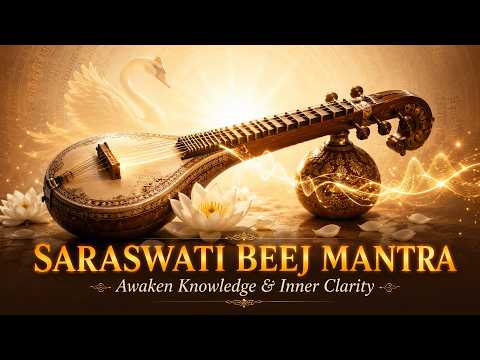
The Saraswati Beej Mantra — Om Aim Saraswatyai Namah — is a ancient Sanskrit chant invoking Goddess Saraswati, the Hindu deity of knowledge, wisdom, speech, and the arts. It is one of the most widely recited mantras among students, writers, musicians, and anyone who works with the mind or creative spirit, and this devotional track from Soulful Music India offers a peaceful, accessible way to bring that tradition into daily life.
If you have ever sat down to study or create and felt your thoughts scatter in every direction, this chant was designed exactly for that moment. There is something quietly powerful about returning to a sound that millions of people before you have turned to for the same reason.
Who Is Goddess Saraswati?
Saraswati is the Hindu goddess who presides over all forms of learning — from academic study and scientific inquiry to music, poetry, and fine art. She is typically depicted seated on a white lotus, holding a veena (a stringed instrument), a book, and prayer beads, each symbol pointing to a different dimension of cultivated human understanding. White is her color, representing purity of thought and the clarity that comes when the mind is free of noise.
Her presence is invoked at the beginning of important intellectual and creative endeavors — before an exam, before a performance, before writing the first line of something new. In many Indian households and schools, her image is placed at the study desk as a quiet, constant reminder of the quality of attention she represents.
What Does the Beej Mantra Actually Mean?
A Beej mantra is a single-syllable seed sound that carries the concentrated energy of a deity, and Aim is Saraswati's own seed syllable. The full mantra — Om Aim Saraswatyai Namah — translates roughly as a salutation to Saraswati, offered through her core vibrational sound. Rather than being a petition or a request, it is more like tuning a radio to a particular frequency: the act of chanting aligns the mind with the qualities the goddess embodies — clarity, focus, eloquence, and creative flow.
The syllable Aim has been understood by practitioners for centuries to directly stimulate mental alertness and sharpen memory. Whether you approach this from a devotional angle or simply as a meditative sound practice, the effect of sitting quietly with this chant before intellectual work tends to be the same: a settling of mental chatter and a sharpening of intention.
How and When to Use This Chant
This track works best as a short ritual of preparation — something you play or chant for five to fifteen minutes before moving into focused work. Play it before a study session, before writing, or before any creative project that requires sustained mental presence. It is also a natural fit before exams, job interviews, or performances, when the mind benefits most from grounding and calm confidence.
During meditation, you can use it as a focal point by chanting along or simply listening, letting the repetition of the mantra gradually quiet background mental noise. On festival days like Saraswati Puja or Vasant Panchami — the day traditionally dedicated to her worship — this chant can become part of a longer home puja or listening session. You do not need to follow any particular religious tradition to benefit from the practice; a sincere, receptive attitude is enough.
Soulful Music India has built this recording with a gentle, unhurried pace that makes it easy to chant along without feeling rushed, which is exactly what a mantra like this calls for. If it resonates with you, passing it along to a student or fellow creator in your life is a simple and generous thing to do.
Common questions
What does "Aim" mean in the Saraswati Beej Mantra?
"Aim" is the seed syllable of Goddess Saraswati, believed to carry her concentrated energy in a single sound. Chanting it is said to sharpen mental clarity, strengthen memory, and bring grace to speech and creative thought.
When is the best time to chant the Saraswati Beej Mantra?
It is traditionally chanted in the morning or before any intellectual or creative activity such as studying, writing, or performing. It is especially meaningful on Vasant Panchami, the festival day dedicated to Goddess Saraswati.
Do I need to be Hindu to use this mantra?
No — while the mantra comes from the Hindu devotional tradition, many people use it simply as a meditative sound practice to cultivate focus and calm. A respectful and open attitude is all that is needed to benefit from it.
Enjoyed this? Follow Soulful Music India for more.